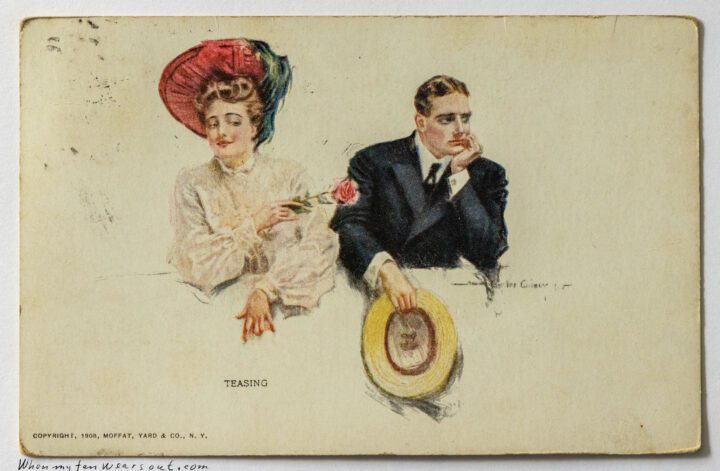
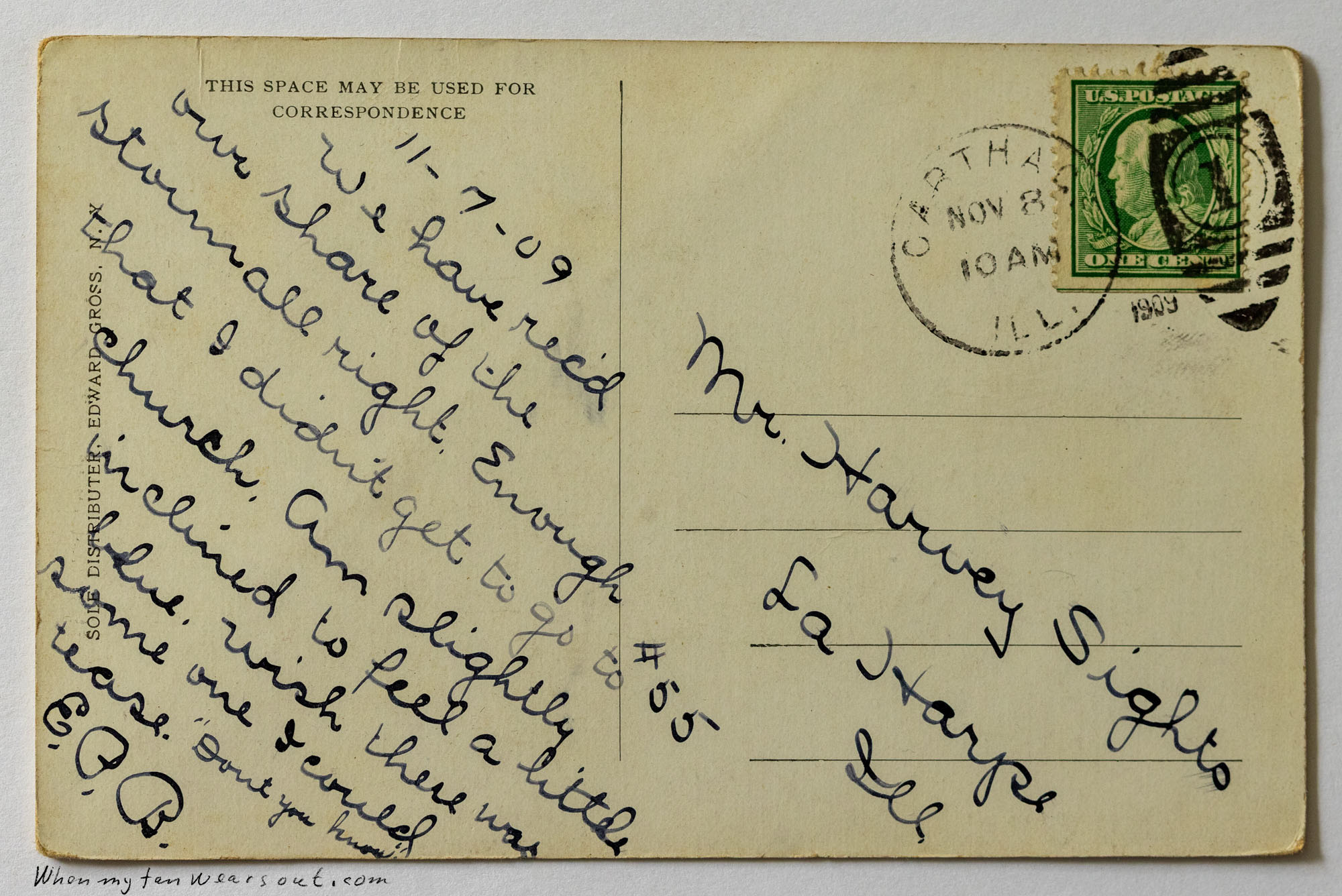
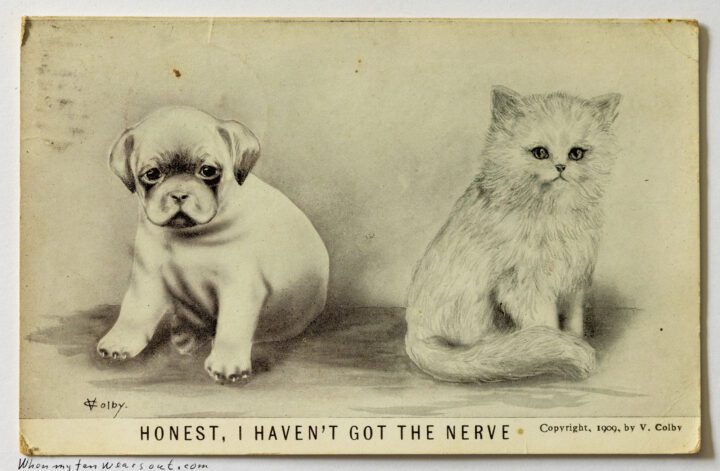
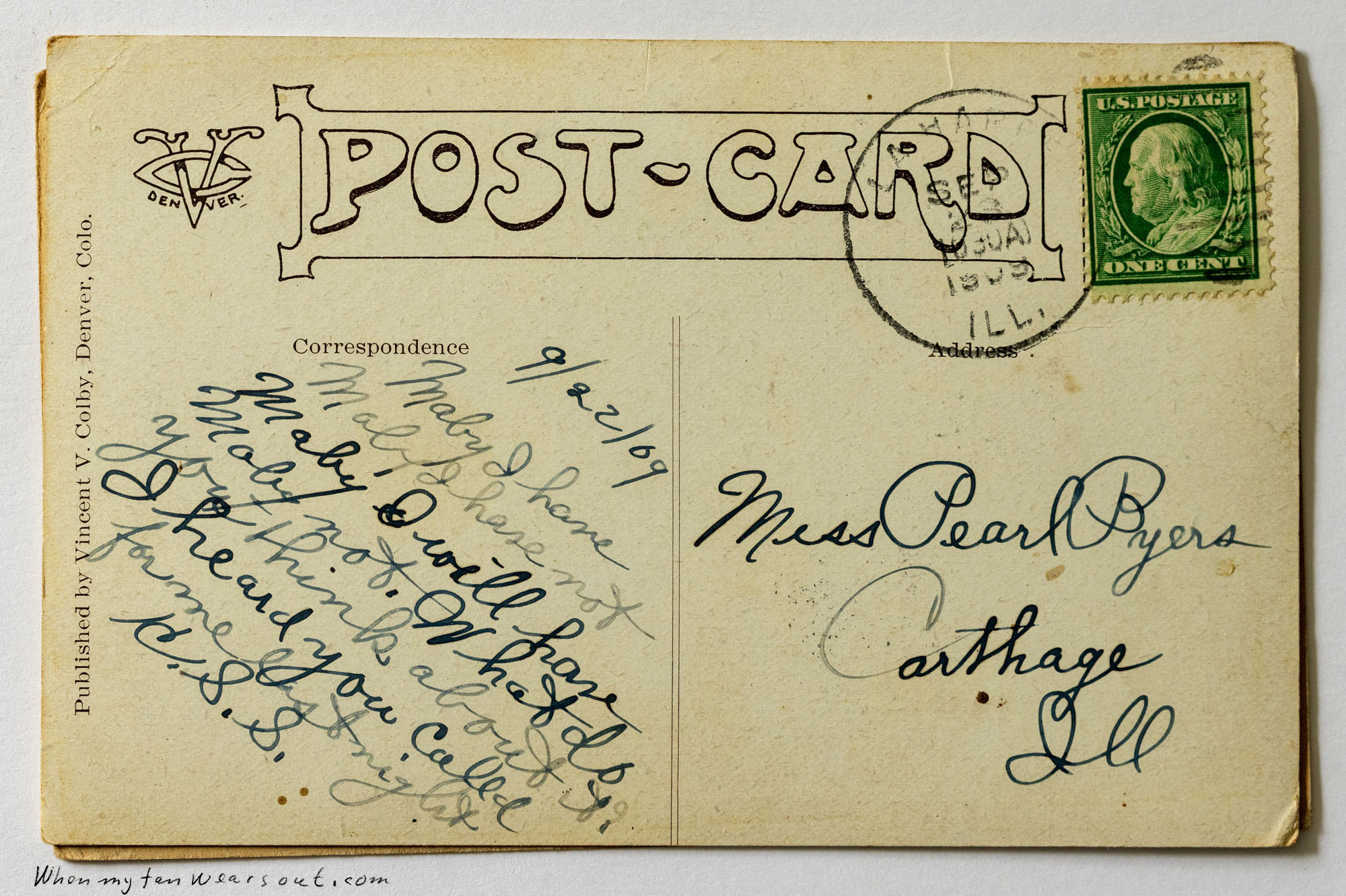
Back — 11-7-09 We have recd our share of the storm all right. Enough that I didn’t get to go to # 55 church, Am slightly blue, wish there was some one I could tease. "Dont you know" E. P. B.
Postcard Information
Postmark: CARTHAGE, ILL., NOV 8 1909
Sent To: La Harpe IL
Era: Golden Age (1907–1915)
Publisher: EDWARD GROSS / MOFFAT, YARD & CO., N. Y.
Back — Have been to church this afternoon. Am afraid something terrible will happen. I wonder if Aunt Mary will see anything this even. Pearle. 9-16-09.
Back — Think this is prettier than the church ] Dear Pearl.- Am having a fine time in Basco. Saw J. S. this morning, and he asked me how Carthage was getting along. I paid [illegible] all [illegible] to Alma Tucker.
Postcard Information
Postmark: BASCO, ILL., JUN 12 1908
Sent To: Carthage IL
Era: Golden Age (1907–1915)
Stamp: 1¢
Distance Traveled: ~15 miles
About This Card
The First National Bank in Basco, Illinois occupied a one-story brick building that was, by the standards of this small Hancock County village, a substantial civic investment. Basco sits a few miles from Carthage, too small to have a high school or a park but large enough to need a bank for the farm families of the surrounding township. A.C.D. sent this real photo postcard from Basco. The bank’s solid brick construction — modest but permanent — expressed the confidence of rural banking in a period when small-town banks were the primary financial institutions for agricultural communities.
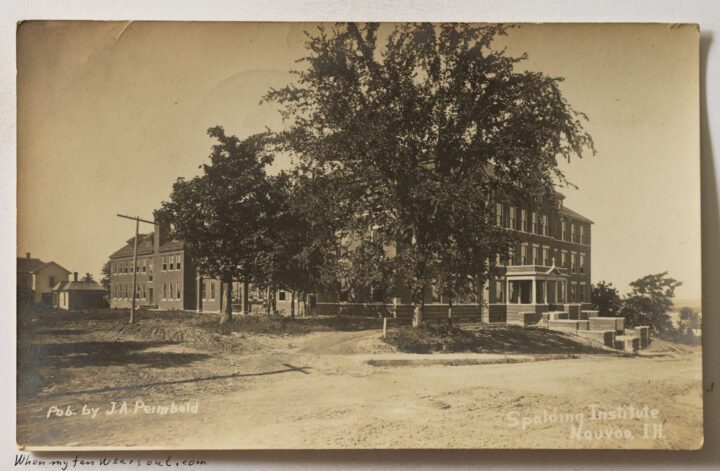
Back — Before 1910 Nauvoo Ill Hello Pearle I just got in and had supper will it be all right to come out any sunday I dont know what sunday I can get off but will come when I can well what did your Papa think of me I bet he thought I was a hot one well that muddy well write soon will sent a letter to morrow Ray Jarvis
Postcard Information
Postmark: NAUVOO, ILL., AUG 21 1909
Sent To: Carthage IL
Era: Golden Age (1907–1915)
Publisher: J.A. Reimbold
Stamp: 1¢
Distance Traveled: ~15 miles
About This Card
Nauvoo, Illinois was founded in 1839 by Joseph Smith as the capital of the Latter-day Saint movement after the church’s expulsion from Missouri. At its peak in 1843–44, Nauvoo had a population of roughly 12,000 — one of the largest cities in Illinois — with a temple under construction on the bluff above the river. Smith was arrested on charges of treason and transported to the jail in Carthage, twenty-five miles to the east, where he was killed by a mob on June 27, 1844. The Mormons evacuated under Brigham Young and crossed the Mississippi toward Utah in 1846, and Nauvoo collapsed almost overnight. The Spalding Institute shown in this 1909 postcard was a Catholic school that occupied the rebuilding city long after the exodus. Ray Jarvis was visiting and wrote Pearl asking when he could come by on a Sunday.
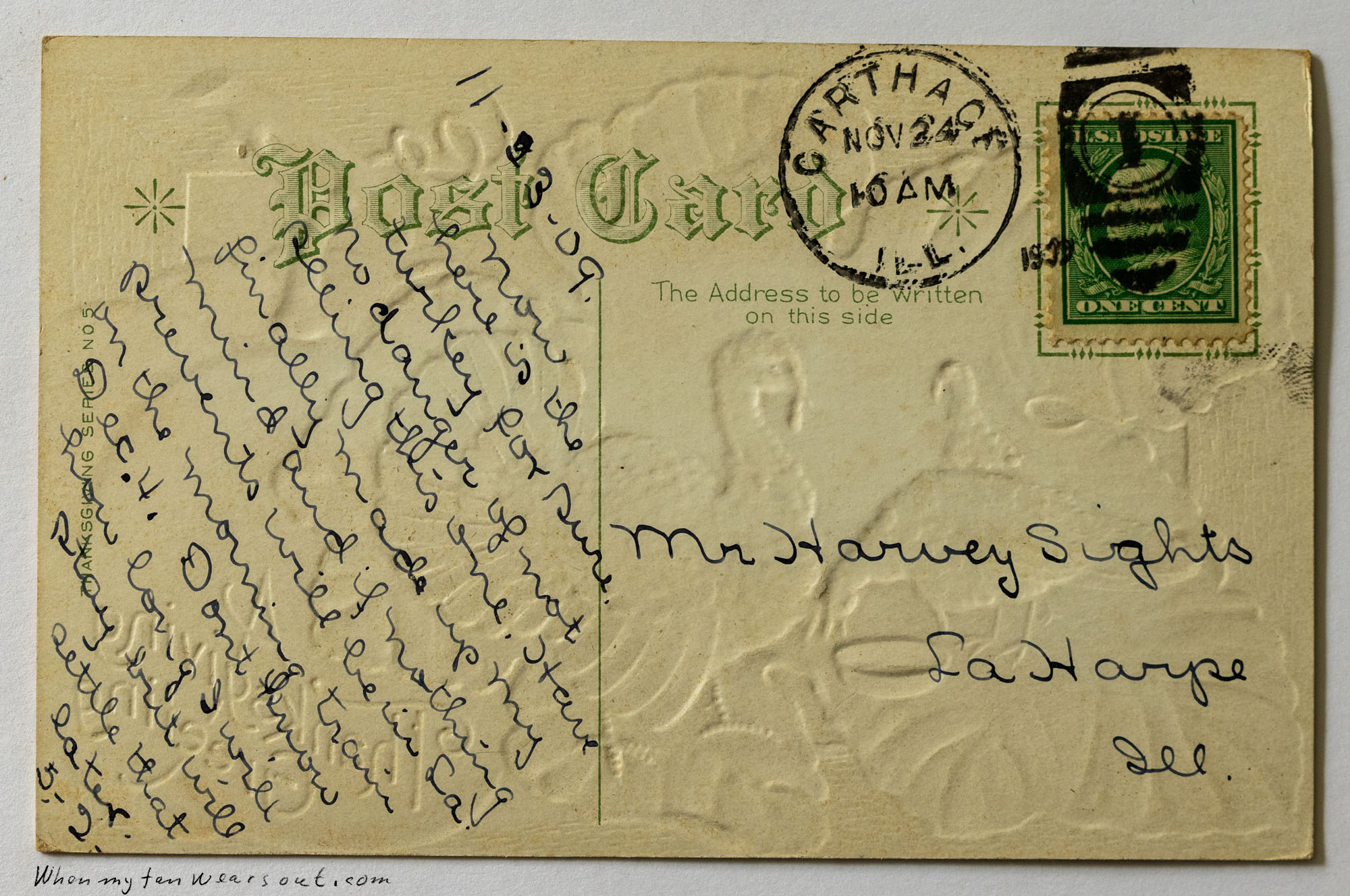
Back — 11-23-09. Well here is the turkey for sure. no danger of not being [?] this one. Have finally made up my mind and if nothing prevents will be in La on the morning train Wed. Dont know how long I will stay but will settle that later. E. [?]
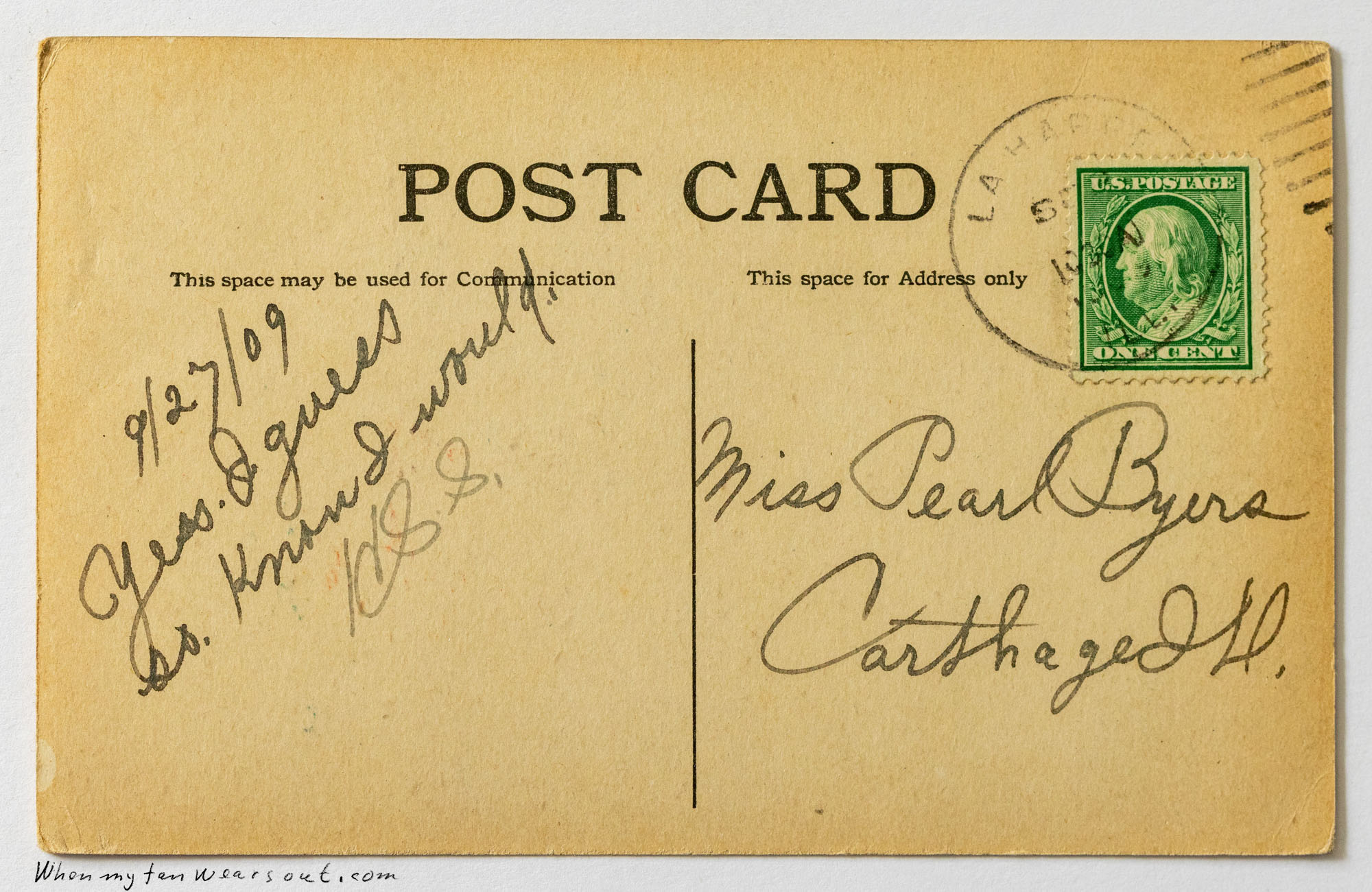
Back — 9/13/09 Guess we will have to talk matters over with some one about that vacation deal. Will give that photograph [?] on the lecture or phot. [?] Cards. Some one said they saw you when they were in Carthage H.R.S.
Postcard Information
Postmark: LA HARPE, ILL., SEP 13 1909
Sent To: Carthage IL
Era: Golden Age (1907–1915)
Publisher: E C C
Print Origin: Printed in Germany
Stamp: 1¢ — Features a portrait of Benjamin Franklin.
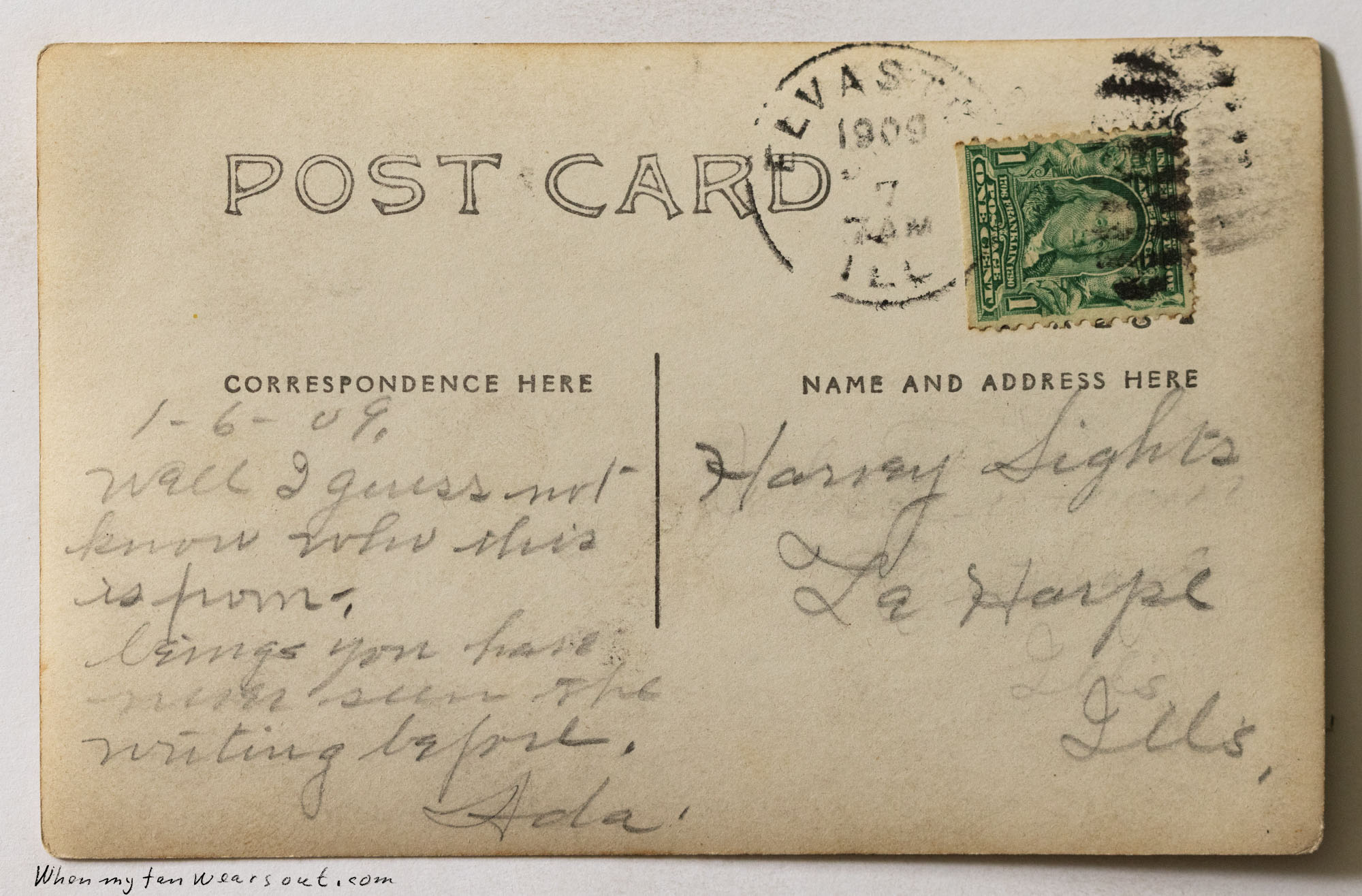
Back — 1-6-09. well I guess not know who this is from, being you have never seen the writing before. Ada.
Postcard Information
Postmark: ELVASTON, ILL., JAN 7 1909
Sent To: La Harpe IL
Era: Golden Age (1907–1915)
Stamp: 1¢
Distance Traveled: ~15 miles
About This Card
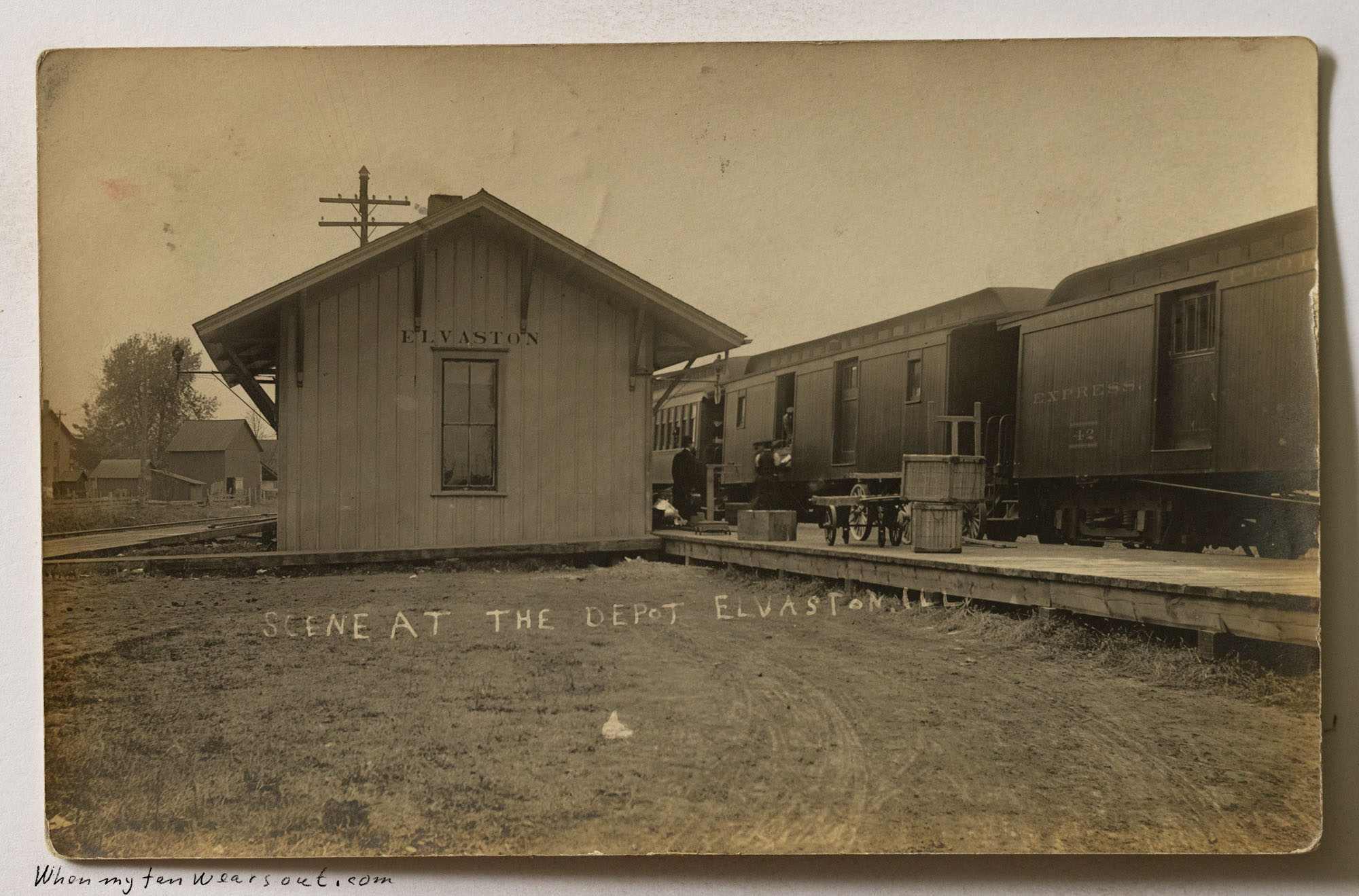
The train depot in Elvaston, Illinois was a small wooden station on a branch line serving the agricultural communities of western Hancock County. Elvaston is a minor town a few miles from the Mississippi, and its depot — shown here in a sepia real photo postcard — represented the minimum rail infrastructure that even the smallest communities expected in the early twentieth century. Ada sent this card from Elvaston. The depot is modest; the ambition of having a postcard made of it is not.
Back — Have a good time for me too. ] Do not depend on me to be in B—— as cir-cumstances may not permit but will let you know if ( I can come ) Arrived in Dallas 10,30 but did not get home until 11 o’clock, it is still very damp here I guess I will not come to B. today am so sleepy V.H.
Postcard Information
Postmark: DALLAS CITY, ILL., JUL 6 1909
Sent To: Carthage IL
Era: Golden Age (1907–1915)
Stamp: 1¢
Distance Traveled: ~15 miles
About This Card
This panoramic view of Dallas City, Illinois from an elevated position shows the full extent of the town along the Mississippi — its relationship to the river, the flat bottomland, and the bluffs that rise behind it. V.H. sent this card from Dallas City. The cluster of Dallas City real photo postcards in the collection (cards 1095–1101) represents an unusual level of documentary coverage for a single small town — someone in Dallas City, or visiting it, was systematically photographing and distributing images of the community.